Basking behavior, sweating and thermal ecology of the Indian tree frog, Polypedates maculatus
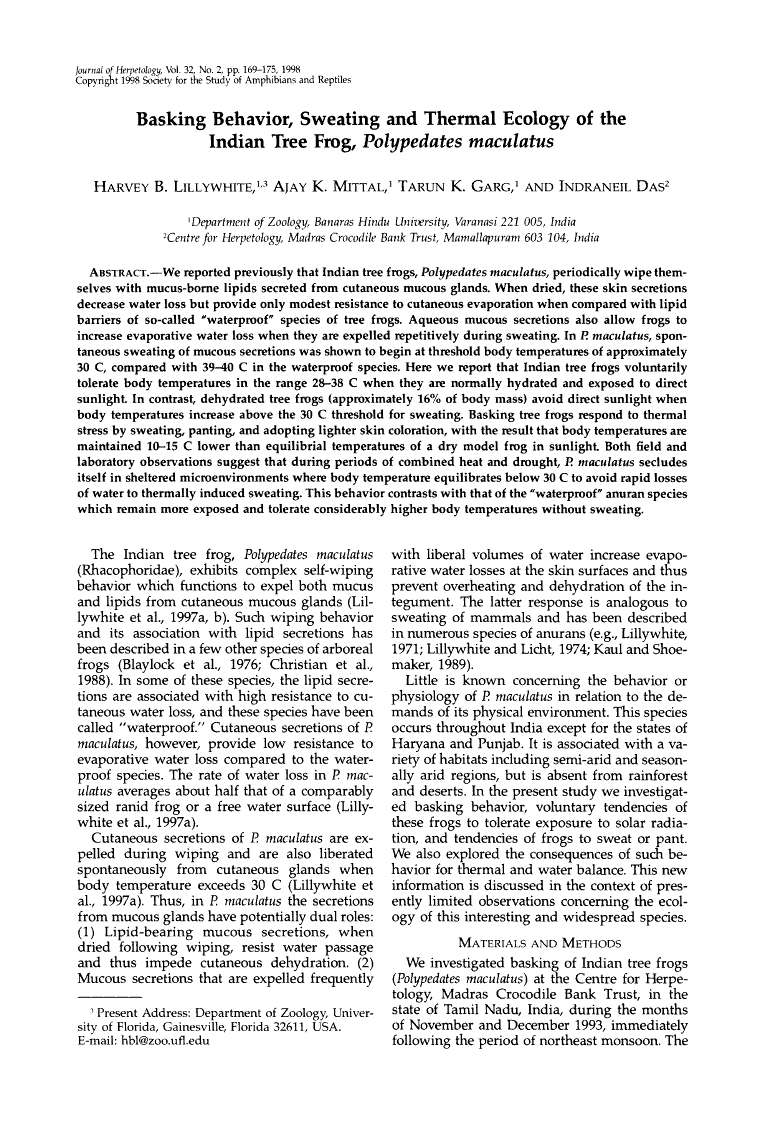
We reported previously that Indian free frogs, Polypedates maculatus, periodically wipe themselves with mucus-borne lipids secreted from cutaneous mucous glands. When dried, these skin secretions decrease water loss but provide only modest resistance to cutaneous evaporation when compared with lipid...
| Main Authors: | , , , |
|---|---|
| Format: | Article |
| Language: | English |
| Published: |
Society for the Study of Amphibians and Reptiles
1998
|
| Subjects: | |
| Online Access: | http://ir.unimas.my/id/eprint/11599/ http://ir.unimas.my/id/eprint/11599/1/Basking%20behavior.gif |
| _version_ | 1848837042718375936 |
|---|---|
| author | Lillywhite, Harvey B. Mittal, Ajay K. Garg, Tarun K. Das, I. |
| author_facet | Lillywhite, Harvey B. Mittal, Ajay K. Garg, Tarun K. Das, I. |
| author_sort | Lillywhite, Harvey B. |
| building | UNIMAS Institutional Repository |
| collection | Online Access |
| description | We reported previously that Indian free frogs, Polypedates maculatus, periodically wipe themselves with mucus-borne lipids secreted from cutaneous mucous glands. When dried, these skin secretions decrease water loss but provide only modest resistance to cutaneous evaporation when compared with lipid barriers of so-called "waterproof" species of tree frogs. Aqueous mucous secretions also allow frogs to increase evaporative water loss when they are expelled repetitively during sweating. In P. maculatus, spontaneous sweating of mucous secretions was shown to begin at threshold body temperatures of approximately 30 C, compared with 39-40 C in the waterproof species. Here we report that Indian tree frogs voluntarily tolerate body temperatures in the range 28-38 C when they are normally hydrated and exposed to direct sunlight. In contrast, dehydrated tree frogs (approximately 16% of body mass) avoid direct sunlight when body temperatures increase above the 30 C threshold for sweating. Basking tree frogs respond to thermal stress by sweating, panting, and adopting lighter skin coloration, with the result that body temperatures are maintained 10-15 C lower than equilibrial temperatures of a dry model frog in sunlight. Both field and laboratory observations suggest that during periods of combined heat and drought, P. maculatus secludes itself in sheltered microenvironments where body temperature equilibrates below 30 C to avoid rapid losses of water to thermally induced sweating. This behavior contrasts with that of the "waterproof" anuran species which remain more exposed and tolerate considerably higher body temperatures without sweating. |
| first_indexed | 2025-11-15T06:33:22Z |
| format | Article |
| id | unimas-11599 |
| institution | Universiti Malaysia Sarawak |
| institution_category | Local University |
| language | English |
| last_indexed | 2025-11-15T06:33:22Z |
| publishDate | 1998 |
| publisher | Society for the Study of Amphibians and Reptiles |
| recordtype | eprints |
| repository_type | Digital Repository |
| spelling | unimas-115992022-01-19T01:21:11Z http://ir.unimas.my/id/eprint/11599/ Basking behavior, sweating and thermal ecology of the Indian tree frog, Polypedates maculatus Lillywhite, Harvey B. Mittal, Ajay K. Garg, Tarun K. Das, I. QH301 Biology QL Zoology We reported previously that Indian free frogs, Polypedates maculatus, periodically wipe themselves with mucus-borne lipids secreted from cutaneous mucous glands. When dried, these skin secretions decrease water loss but provide only modest resistance to cutaneous evaporation when compared with lipid barriers of so-called "waterproof" species of tree frogs. Aqueous mucous secretions also allow frogs to increase evaporative water loss when they are expelled repetitively during sweating. In P. maculatus, spontaneous sweating of mucous secretions was shown to begin at threshold body temperatures of approximately 30 C, compared with 39-40 C in the waterproof species. Here we report that Indian tree frogs voluntarily tolerate body temperatures in the range 28-38 C when they are normally hydrated and exposed to direct sunlight. In contrast, dehydrated tree frogs (approximately 16% of body mass) avoid direct sunlight when body temperatures increase above the 30 C threshold for sweating. Basking tree frogs respond to thermal stress by sweating, panting, and adopting lighter skin coloration, with the result that body temperatures are maintained 10-15 C lower than equilibrial temperatures of a dry model frog in sunlight. Both field and laboratory observations suggest that during periods of combined heat and drought, P. maculatus secludes itself in sheltered microenvironments where body temperature equilibrates below 30 C to avoid rapid losses of water to thermally induced sweating. This behavior contrasts with that of the "waterproof" anuran species which remain more exposed and tolerate considerably higher body temperatures without sweating. Society for the Study of Amphibians and Reptiles 1998 Article NonPeerReviewed image en http://ir.unimas.my/id/eprint/11599/1/Basking%20behavior.gif Lillywhite, Harvey B. and Mittal, Ajay K. and Garg, Tarun K. and Das, I. (1998) Basking behavior, sweating and thermal ecology of the Indian tree frog, Polypedates maculatus. Journal of Herpetology, 32 (2). pp. 169-175. ISSN 0022-1511 http://www.jstor.org/stable/1565293?seq=1#page_scan_tab_contents |
| spellingShingle | QH301 Biology QL Zoology Lillywhite, Harvey B. Mittal, Ajay K. Garg, Tarun K. Das, I. Basking behavior, sweating and thermal ecology of the Indian tree frog, Polypedates maculatus |
| title | Basking behavior, sweating and thermal ecology of the Indian tree frog, Polypedates maculatus |
| title_full | Basking behavior, sweating and thermal ecology of the Indian tree frog, Polypedates maculatus |
| title_fullStr | Basking behavior, sweating and thermal ecology of the Indian tree frog, Polypedates maculatus |
| title_full_unstemmed | Basking behavior, sweating and thermal ecology of the Indian tree frog, Polypedates maculatus |
| title_short | Basking behavior, sweating and thermal ecology of the Indian tree frog, Polypedates maculatus |
| title_sort | basking behavior, sweating and thermal ecology of the indian tree frog, polypedates maculatus |
| topic | QH301 Biology QL Zoology |
| url | http://ir.unimas.my/id/eprint/11599/ http://ir.unimas.my/id/eprint/11599/ http://ir.unimas.my/id/eprint/11599/1/Basking%20behavior.gif |